
Currituck, NC
Roofing & Siding Contractor in Currituck, NC
Currituck County sits at an unusual crossroads, close enough to the Outer Banks that its homes absorb the same punishing salt air and wind-driven rain, yet far enough inland that many contractors treat it as an afterthought. Waterfront properties along the Currituck Sound face a compounding set of stressors: persistent humidity that never fully clears between storms, salt spray that works its way into every seam, and seasonal wind events that test every fastener and flashing joint. Homeowners here need a contractor who understands that dynamic, not one who shows up with a standard residential checklist designed for a subdivision in Raleigh. Standard checklists fail here.
Quality Built Exteriors, a family-owned local business since 2005, serving Currituck and the surrounding Hampton Roads area, provides homeowners with roofing and siding solutions built specifically for this coastal environment. We operate out of Hampton Roads, which means we cross the state line with genuine familiarity. The marine conditions along the Virginia Beach coastline and the Currituck Sound share more in common than they differ, and that experience translates directly into how we specify materials, install flashing, and approach every inspection.
Maintaining a home in Currituck means managing microclimates that shift from one side of the house to the other. The north-facing elevation of a waterfront property takes the brunt of Nor’easter-driven rain, while the south face endures prolonged UV exposure that degrades lower-grade materials faster than most homeowners expect. Roofing and siding don’t function as separate systems here; they form a unified exterior envelope, and a gap in one creates a vulnerability in the other. When that envelope fails, water finds its way into wall cavities and sheathing long before a stain appears on the ceiling. Our approach treats both systems together, which is why we handle roofing and siding under one crew rather than sending separate contractors who never coordinate their work. One crew coordinates it all.
Coastal Warning Signs Worth Watching
Currituck homeowners should watch for these indicators before a small problem becomes a structural one:
- Warped or buckled siding panels, particularly on wind-exposed elevations
- Loose or missing shingles after any storm event, even a moderate one
- Water stains on interior ceilings or walls that appear only during heavy rain
- Rust streaks running down siding from metal fasteners or flashing
- Soft spots or discoloration around window and door trim
Salt-air corrosion, sand abrasion, and wind-uplift stress work gradually and quietly. By the time damage is visible from the street, the underlying sheathing has often been compromised for months.
Schedule a free coastal envelope and leak-detection assessment with our team, featuring fair, upfront pricing. Request a free estimate online, or call us directly at (757) 255-7627: we’re available 24/7 for urgent situations.
Siding Contractor Services in Currituck, NC
Homes in your neighborhood require siding solutions that go beyond standard residential installation. Standard materials fail here. The marine environment here accelerates wear on materials that perform sufficiently in less demanding climates, so the selection and installation process both matter more than they would in a typical inland project.
Our siding services for Currituck County include:
- Full siding replacement on existing homes, including removal and disposal of deteriorated panels
- New siding installation on additions, accessory structures, and vacation rental properties
- Partial siding repair for storm-damaged sections, matched to existing profiles where possible
- Flashing and trim replacement at windows, doors, and roofline transitions
- Moisture barrier inspection and replacement during re-siding projects
Different elevations of a coastal home weather differently, and we focus on recommending what makes sense for your specific situation. Exposure dictates our strategy. A north-facing wall that catches prevailing storm winds needs tighter fastening patterns and stronger flashing than a sheltered interior elevation. That kind of site-specific thinking is what separates a durable installation from one that starts showing problems within a few seasons.
Our work in Currituck County draws on the same expertise behind our roofing services in Virginia Beach, where the coastal exposure conditions are closely comparable.
Durable Coastal Siding Materials for Outer Banks Adjacent Homes
Choosing the right siding material for a home near the Currituck Sound involves a different decision process than a standard product selection. Coastal homes demand more. The primary decision factor is how a material holds up under sustained salt-air exposure, high humidity, and wind-borne debris, rather than just aesthetics or cost.
These are the materials we recommend most consistently for coastal NC homes, and the reasons why:
- Fiber cement siding: Products like HardiePlank siding provide the same quality you’d expect if you were building for your own family, standing up to moisture absorption, salt-air degradation, and impact damage. Unlike wood, fiber cement doesn’t swell, rot, or delaminate when exposed to the humidity cycles common along the Sound. It holds paint well over time, which matters when re-coating is the primary maintenance task rather than full replacement.
- Premium vinyl siding: Higher-grade vinyl formulations resist fading and brittleness better than entry-level products, making them a practical choice for homeowners who want lower long-term maintenance costs. The key is thickness and UV stabilization; thinner panels that work fine in moderate climates tend to become brittle and crack under the thermal cycling and UV load that coastal NC delivers. Thin vinyl fails fast.
- Engineered wood siding: Properly sealed and installed engineered wood offers a traditional appearance with better dimensional stability than natural wood. It’s a reasonable choice for homes where aesthetics drive the decision, provided the installation includes a continuous moisture barrier and all cut edges are sealed at the time of installation, a step that’s easy to skip and expensive to correct later.
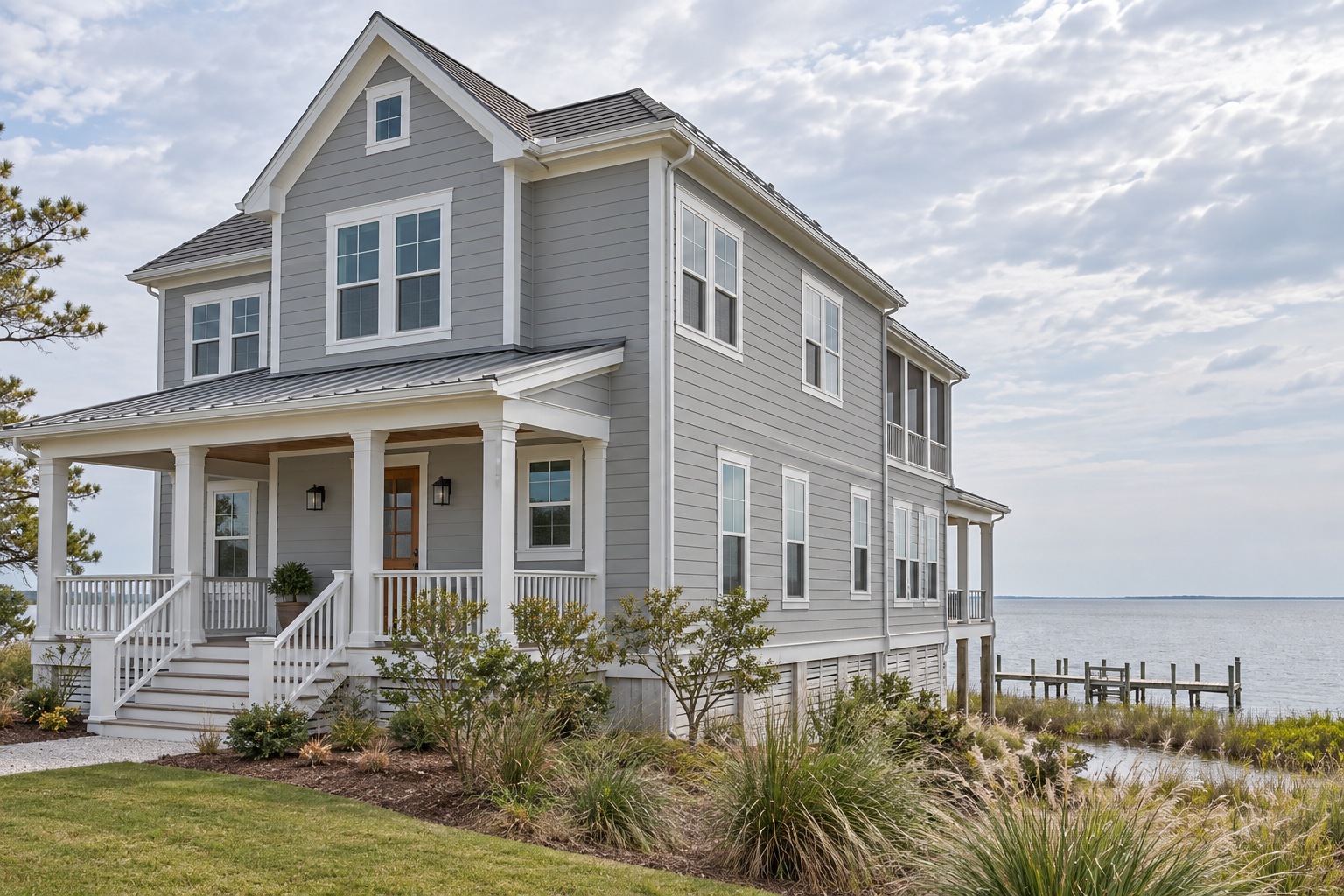
Waterfront Property Leak Detection & Prevention
Water doesn’t respect the boundary between a roofline and a siding panel. Leaks spread quickly. On coastal properties, wind-driven rain enters at angles that standard drainage details weren’t designed to handle, particularly at the transition zones where the roof overhang meets the top course of siding, and at window and door rough openings where flashing tolerances are tight. By the time moisture shows up as a stain on drywall, it has typically been traveling through wall cavities for weeks or longer.
Our leak detection process uses non-invasive testing methods to locate moisture pathways behind cladding without requiring destructive opening of walls. Rather than guessing at the source of an interior stain, we trace the path water is traveling, which often originates several feet away from where it becomes visible. Once we’ve mapped the intrusion points, our roof leak repair services address both the roofing and siding components in a coordinated sequence, so the repair holds rather than redirecting water to a new weak point.
Hidden moisture is a particular hazard for waterfront homes because the conditions that drive it, high humidity, frequent wetting and drying cycles, and limited airflow on enclosed elevations, also accelerate the structural rot and mold growth that follow. Catching it early, before it reaches framing members, protects your investment and prevents a major renovation. Delay breeds rot.
“We called Quality Built Exteriors; they came out the next day and had us on the books and scheduled quickly.”
For Currituck homeowners dealing with an active leak or suspicious interior staining, that kind of response time matters. Contact Quality Built Exteriors to speak with a local project manager about your leak concerns, or call (757) 255-7627 any time.
Coastal Roofing and Siding Services Currituck
The most common failure point on coastal homes occurs at the transition zones where the roofing and siding systems meet, rather than in the middle of a panel or shingle field. Flashing at the roofline, kick-out details at dormers, and step flashing along chimneys and walls are all areas where improper installation creates a direct path for water to enter the wall assembly. Coordinating roofing and siding under a single crew eliminates the gap that appears when two separate contractors each assume the other handled the critical detail. One team prevents gaps.
Our team handles joint ventilation and flashing integration as part of every project where roofing and siding work intersects. Proper ventilation behind siding panels prevents moisture from gathering against the sheathing, a detail that’s especially important on Currituck properties where exterior walls stay damp longer than they would in a drier climate. We build to meet or exceed North Carolina’s coastal wind requirements, ensuring your home is built to handle the kind of storms we see every hurricane season.
Vacation rental owners in Currituck face a particular challenge: they need work done on a schedule that doesn’t disrupt rental income, and they need a contractor who can communicate clearly without requiring the owner to be on-site. We manage both aspects of the schedule and communication so you do not have to worry about the logistics. We handle the details.
Protecting Your Currituck Home from Storm Damage
Nor’easters and tropical systems affect Currituck County differently than they affect communities further inland. Coastal weather is unpredictable. The county’s position, flanked by the Currituck Sound to the west and exposed to Atlantic storm tracks from the east, means that wind-driven rain can arrive from multiple directions during a single event, testing the entire exterior envelope rather than just one face of the building. Homeowners who’ve lived here through a few hurricane seasons understand that the damage isn’t always dramatic; sometimes it’s a loosened piece of flashing or a few displaced shingles that let water in slowly over the following weeks.
Gradual salt-air wear and sudden storm damage look different on inspection, and the difference matters for documentation purposes. Salt-air degradation shows up as corrosion on fasteners, chalking or peeling on paint and coatings, and slow delamination at seams, which are changes that accumulate over years. Storm damage is typically more localized, presenting as lifted shingles, cracked panels, displaced flashing, or impact marks from wind-borne debris. Both require attention, but they call for different repair approaches and different conversations with your insurance carrier. We provide detailed, honest inspection reports after major storm events that homeowners can use for their own records.
“Ray was truly a pleasure to work with. I expect it won’t be the last time. VERY impressed with the pride in workmanship!”

For urgent storm damage situations, we’re available at (757) 255-7627 around the clock. Waiting to assess damage after a storm often allows secondary water intrusion to compound the original problem, so early contact is worth it even if you’re not certain the damage is serious. Do not wait.
We provide turn-key installation, handling every project from permitting through final clean-up, which matters especially for absentee property owners managing vacation rentals in Currituck. Mike Reedy and Melissa James work directly with property managers and owners to provide clear project updates throughout, so you’re never left wondering where things stand. Owners who aren’t local can rely on us to manage the full scope without requiring them to be present for every phase.
“Outstanding company. Ray Carter, my rep, took great care of me. She kept me informed every step of the way.”
Navigating Coastal Building Challenges in Currituck County
[Inline Image]PLACEHOLDER Close-up of professional siding installation in Currituck, NC, showing precision-fitted flashing at a window opening with wind-resistant overlap detail and fiber cement panels. Sharp detail, natural coastal light. Alt text: “Close-up of professional siding installation in Currituck, NC showing wind-resistant flashing.”[/Inline Image]
Our work across Hampton Roads gives us a practical baseline for what coastal construction demands. Experience guides our work. The marine environment along the Virginia Beach shoreline and the Currituck Sound share the same combination of salt-laden air, high humidity, and periodic severe weather, and the lessons learned on one side of the state line apply directly on the other. We understand North Carolina’s coastal building requirements, and we navigate municipal permitting in Currituck County without putting that burden on the homeowner.
Waterfront properties along the Sound present a specific challenge that inland homes don’t: wind-driven rain can arrive nearly horizontally during a significant storm, finding gaps in flashing and siding joints that standard installation tolerances leave exposed. Our installations rely on marine-grade construction, using hardware and fastening systems rated for salt-air exposure, and we pay particular attention to the integrity of the moisture barrier at every penetration. This includes outlets, fixtures, hose bibs, and any other point where the cladding is interrupted. There’s no shortcut in that process that doesn’t eventually show up as a leak. Precision prevents leaks.
Seasonal Care and Maintenance for Coastal Exteriors
Salt residue builds up on siding surfaces between rain events, and on properties close to the Currituck Sound, that accumulation happens faster than most homeowners expect. A low-pressure rinse with fresh water after significant wind events, particularly those that come off the water, removes surface salt before it works into panel seams or begins corroding metal trim and fasteners. This doesn’t require professional equipment; a standard garden hose is sufficient for the siding surface itself. Simple care works wonders.
After any major storm, a visual inspection of flashing joints at the roofline, around windows, and at any penetrations through the siding is worth doing before the next rain event. Displaced or lifted flashing is often visible from the ground with binoculars, and catching it early means a straightforward repair rather than tracing water damage through wall cavities. Check your roofline. Gutters and downspouts deserve the same attention; a blocked downspout during a heavy rain event can back water up against the fascia and into the wall assembly in ways that aren’t obvious until the damage is done.
“I was certainly pleased with the retrofit they did on my house’s original gutters, installing hidden hangers when the rusty nails started to fail. Trust me, go with the good stuff the first time! Give them a call.”, Melissa James
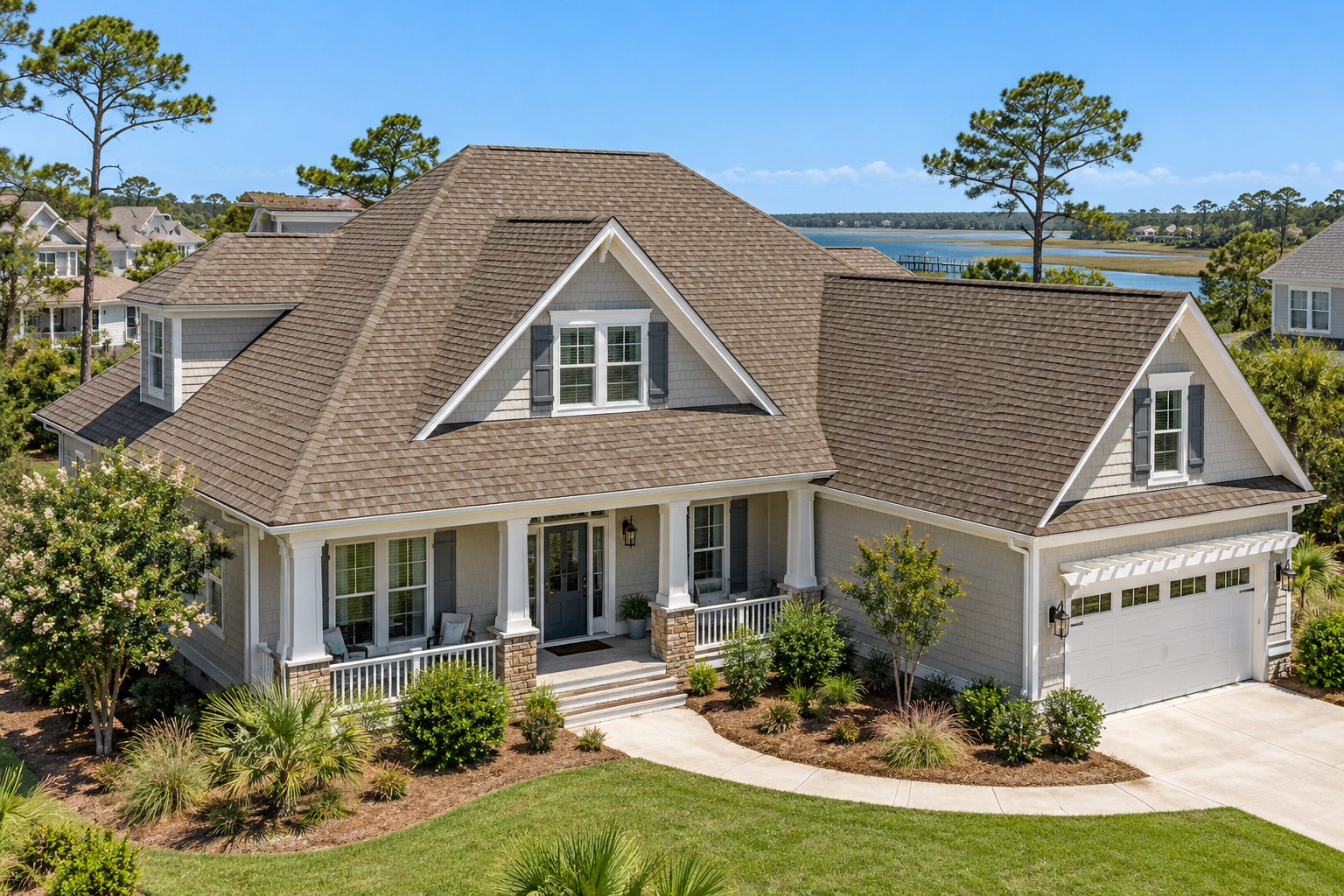
Frequently Asked Questions About Currituck Roofing & Siding
How does salt air affect standard siding materials over time?
Salt air attacks the weakest points in a siding installation first: metal fasteners corrode, standard wood absorbs moisture and rots faster than it would in a drier climate, and lower-grade vinyl loses flexibility and becomes brittle. The degradation is gradual enough that it’s easy to miss until a panel cracks or a fastener fails entirely. Salt damage hides well. Marine-grade hardware and materials like fiber cement are specified for this environment precisely because they’re engineered to resist those failure modes over a longer service life.
What is the difference between gradual coastal wear and sudden storm damage for insurance purposes?
Insurance policies typically cover sudden, accidental damage, such as wind tearing off siding panels, a falling limb damaging the roof, or hail impact, but exclude gradual deterioration caused by age, salt air, or deferred maintenance. The practical consequence for Currituck homeowners is that regular professional inspections create a documented baseline. If a storm causes damage to a roof or siding system that was in good condition at the last inspection, that documentation supports a claim. Without it, an adjuster has no way to distinguish storm damage from pre-existing wear.
How often should a waterfront home in Currituck undergo a professional exterior inspection?
At minimum, once a year, and the timing matters. Annual checks are vital. An inspection before hurricane season gives you a clear picture of anything that needs attention before the most demanding weather arrives. An inspection immediately after any significant storm event is also worth scheduling, even if nothing looks obviously wrong from the ground. Small leaks and displaced flashing don’t announce themselves until the water has already found its way into the wall assembly.
Can you install siding and roofing on vacation rental properties while guests are present?
We work with property managers to schedule around occupancy calendars, and we’re experienced enough with rental properties to know that off-season windows and turnover days are often the most practical times to complete exterior work. For larger projects that require more continuous access, we can discuss phasing options that minimize disruption to the rental schedule. The key is early coordination; the further out we can plan, the more flexibility we have to work around your booking calendar.
Why is joint-ventilation important for coastal siding installations?
Ventilation behind siding panels gives moisture a path to escape rather than accumulating against the sheathing. On coastal properties where exterior walls stay wet longer, and humidity rarely drops to levels that allow thorough drying, that drainage and airflow gap is the primary defense against the rot and mold that follow prolonged moisture contact. Skipping it to simplify installation is a trade-off that tends to show up as a structural problem within a few years, particularly on north-facing and shaded elevations where drying conditions are worst.
Currituck homeowners dealing with aging siding, storm damage, or a leak that hasn’t been properly diagnosed deserve a contractor who understands what this environment demands, not a general contractor who’ll treat it like any other residential job. Quality Built Exteriors brings the same coastal expertise we’ve developed across Hampton Roads directly to Currituck County, and we stand behind the work we do here. Request a free, no-pressure consultation to get started, or call our team at (757) 255-7627. We’re available 24/7, including for urgent storm damage situations where waiting isn’t an option.
Need Roofing Help in ?
Schedule a free inspection and get honest answers about your roof’s condition — no pressure, no guesswork.