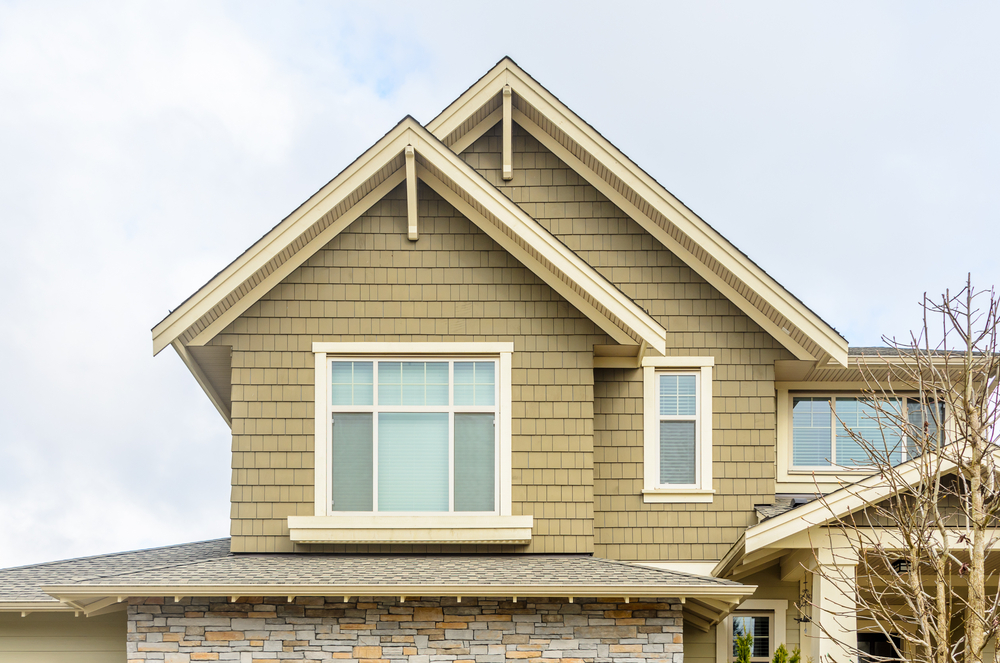
Why Fiber Cement Siding Works for Hampton Roads Homes
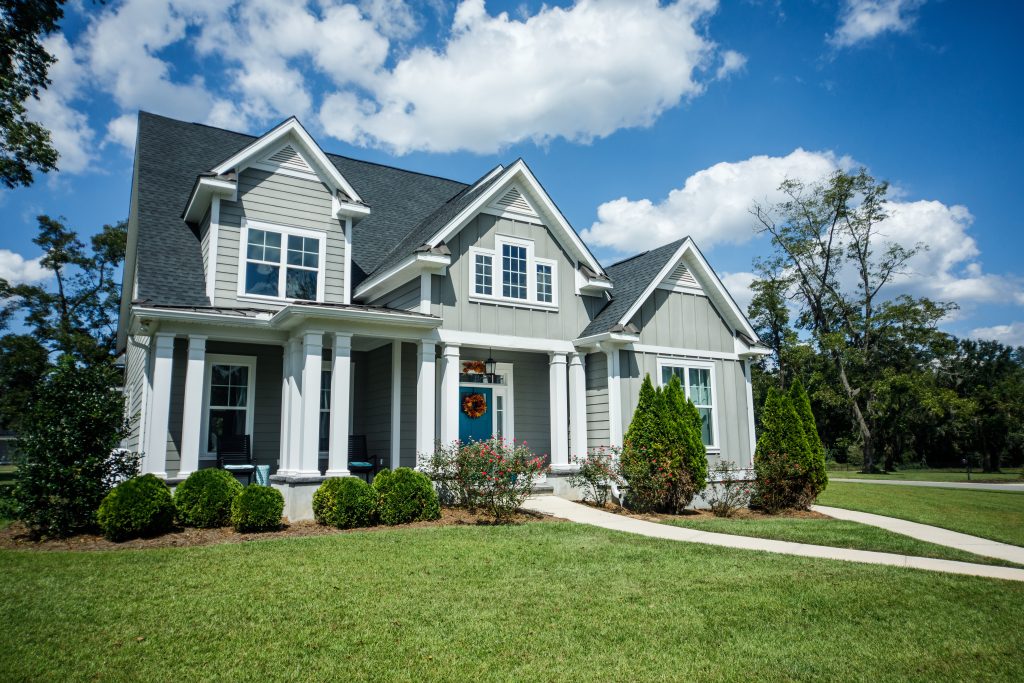
Fiber cement is a dimensionally stable blend of cement, sand, and cellulose fibers, and it functions on a home’s exterior like a shield that breathes with your home, not against it: it deflects wind-driven rain and salt spray from penetrating the wall assembly while still allowing interior moisture vapor to escape outward, which is what prevents rot from developing behind the cladding. Unlike wood, it offers termites and carpenter bees nothing to consume. Unlike vinyl, it doesn’t flex, rattle, or deform under the thermal cycling that Virginia summers impose on south- and west-facing walls.
Virginia Regulatory Callout
Under the 2021 Virginia Construction Code, siding replacement in Group R-3, R-4, or R-5 residential occupancies does not require a building permit, provided the nominal design wind speed for the area does not exceed 100 mph (44.7 m/s) (Virginia Construction Code, dhcd.virginia.gov). That exemption carries less weight than it sounds in Hampton Roads. Under Section 429.3 of the Virginia Uniform Statewide Building Code, the cities of Chesapeake, Norfolk, Portsmouth, and Virginia Beach are designated Wind Zone II for wind load anchoring and structural stability (Virginia Construction Code, dhcd.virginia.gov), which means local wind design criteria must be professionally evaluated before any siding work begins. Properties within a designated historic district or a special flood hazard area require a permit regardless of wind speed (Virginia Construction Code, dhcd.virginia.gov).
A complete exterior assessment covers more than the siding panels themselves. Because roofline transitions, fascia, and soffit conditions all affect how a new siding system performs, we recommend starting with a full exterior review. You can schedule a roof inspection with our team to get an honest picture of what your home’s envelope needs before any material decisions are made.
Why Fiber Cement Outperforms Vinyl in Coastal Virginia
Vinyl siding is priced to move, and that’s about the most generous thing to say about it in a coastal wind zone. It fails here. Fiber cement earns its premium through outcomes that matter over a decade-long ownership horizon:
- Wind-peel resistance: The mass and rigidity of fiber cement planks prevent them from lifting, buckling, or separating from the wall during severe coastal storms, a failure mode that lightweight vinyl panels are particularly susceptible to.
- Dimensional stability: Hardie Board holds its shape under intense summer heat and direct sun exposure without warping, softening, or pulling away from fasteners the way vinyl can.
- Moisture and rot defense: Engineered to endure continuous salt-fog and high humidity, fiber cement resists swelling, peeling, and surface degradation that would compromise other cladding materials over time.
- Fire protection: Fiber cement is non-combustible, providing a safety barrier that neither vinyl nor wood siding can match.
The Long-Term Value of Your Siding Investment
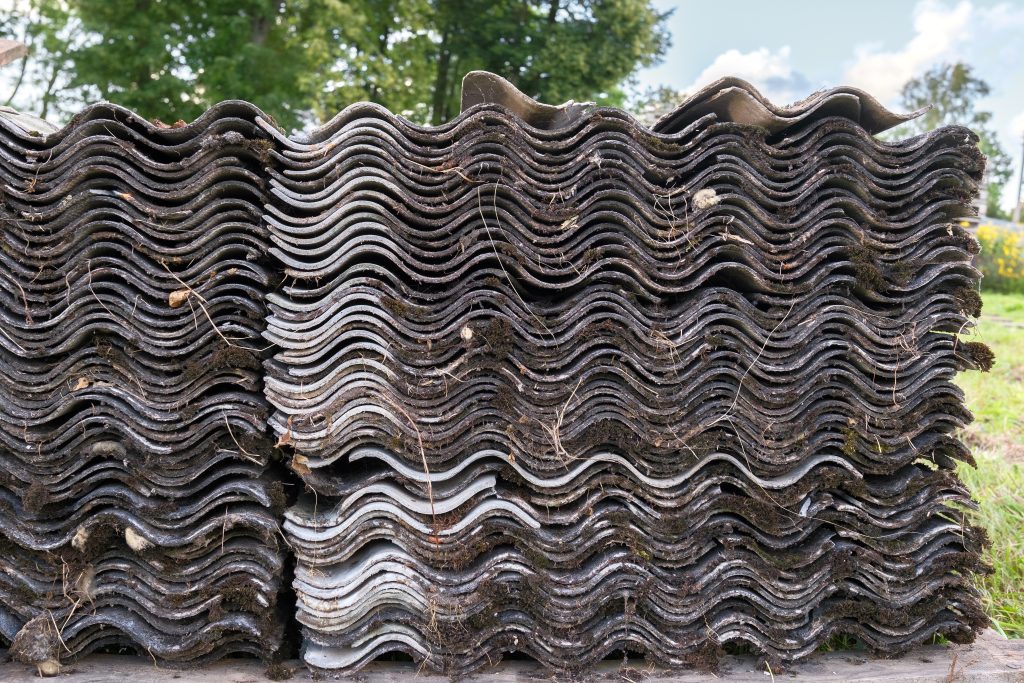
Fiber cement carries a higher upfront cost than standard vinyl, and there’s no point softening that. But it pays off. What changes the equation is the total cost of ownership over the life of the home. Vinyl’s vulnerability to storm damage and thermal fatigue often forces a full replacement within the same window that a single fiber cement installation covers, meaning the homeowner who chose the cheaper option frequently ends up funding two projects instead of one. Beyond avoiding that second tear-off, a well-executed fiber cement installation maximizes home resale value and eliminates the recurring maintenance cycle that wood and vinyl demand. For a coastal property in Hampton Roads, where buyers understand what the climate does to exterior materials, that distinction shows up in appraisals.
Our Turn-Key Siding Replacement Process
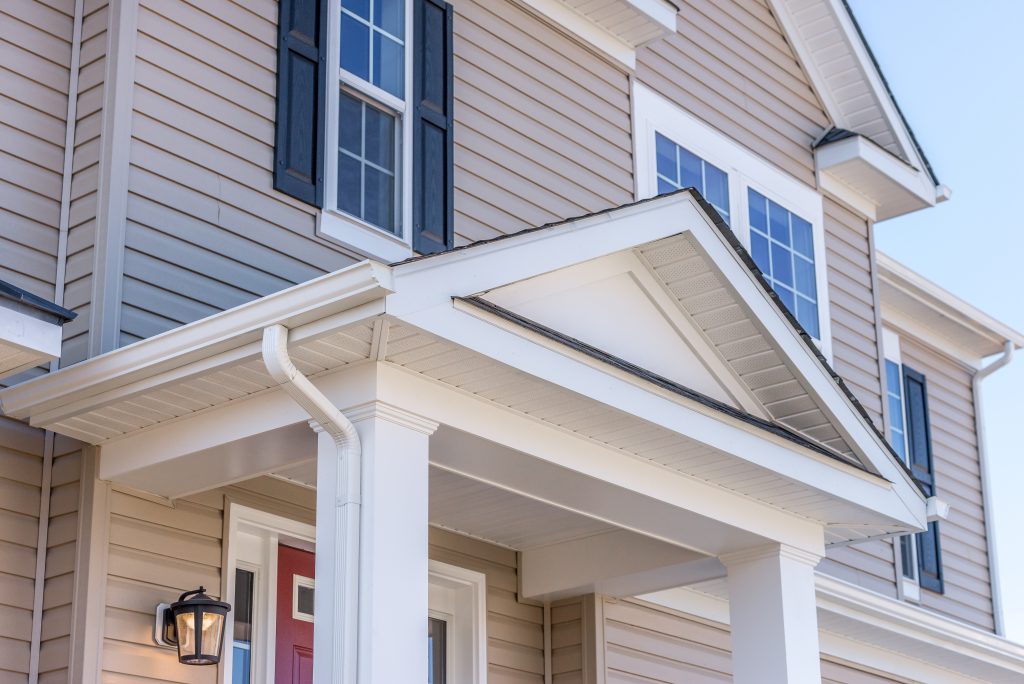
Every project follows a structured sequence designed to protect the home at each phase, not just at the finish line. We do it right.
- Honest Inspection & Planning: We evaluate the existing exterior for rot, structural compromise, and local wind-load requirements before a single panel is ordered.
- Asbestos Verification (For Older Homes): For homes originally permitted before January 1, 1985, Virginia law prohibits issuing a renovation permit until the affected portions have been inspected for asbestos (Virginia Construction Code, dhcd.virginia.gov). We handle this certification step before demolition begins.
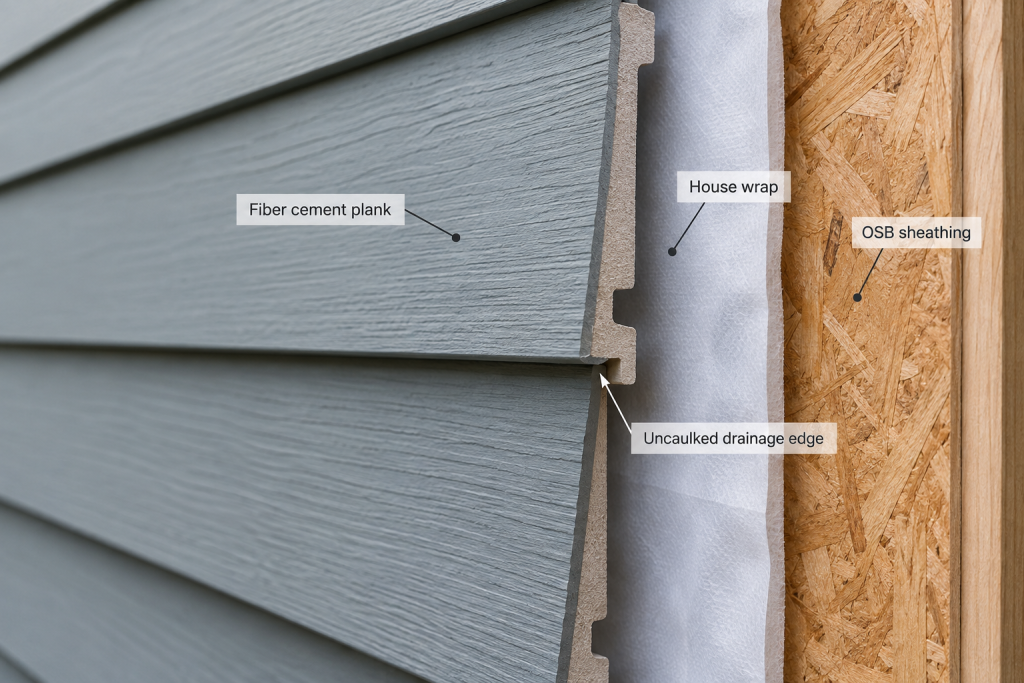
- Tear-Off & Sheathing Preparation: Old cladding comes off carefully, and the underlying rigid sheathing, plywood, or OSB, is inspected and repaired as needed to give the new system a solid, rot-free substrate.
- Weather Barrier & Air Barrier Installation: We install a high-performance moisture-resistant house wrap and air barriers that comply with the International Energy Conservation Code (IECC), as required by the Virginia Construction Code (Virginia Construction Code, dhcd.virginia.gov).
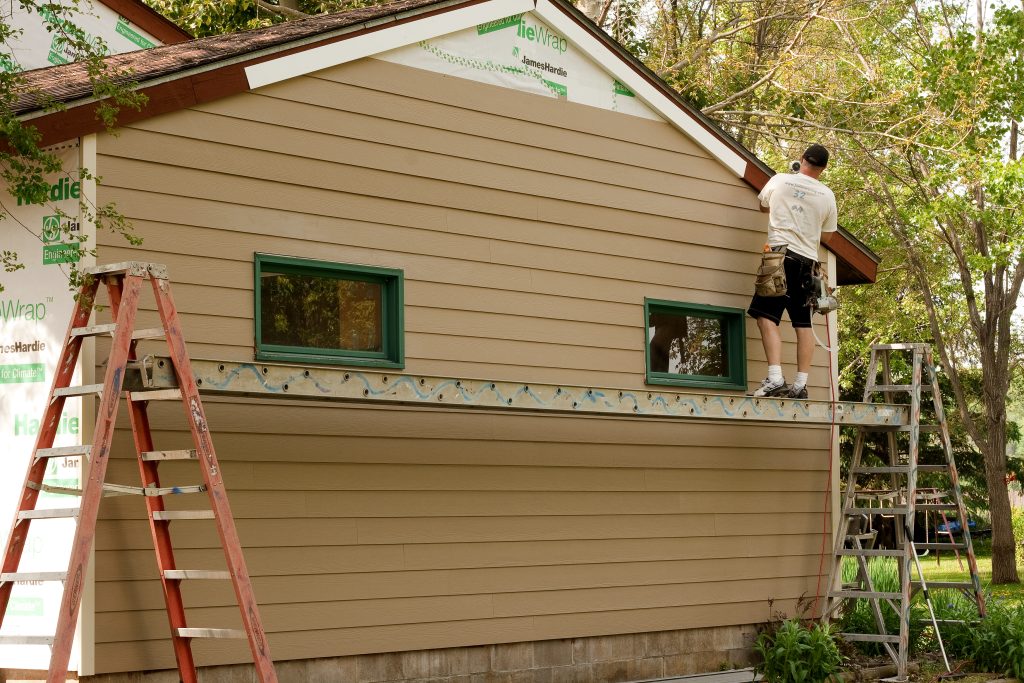
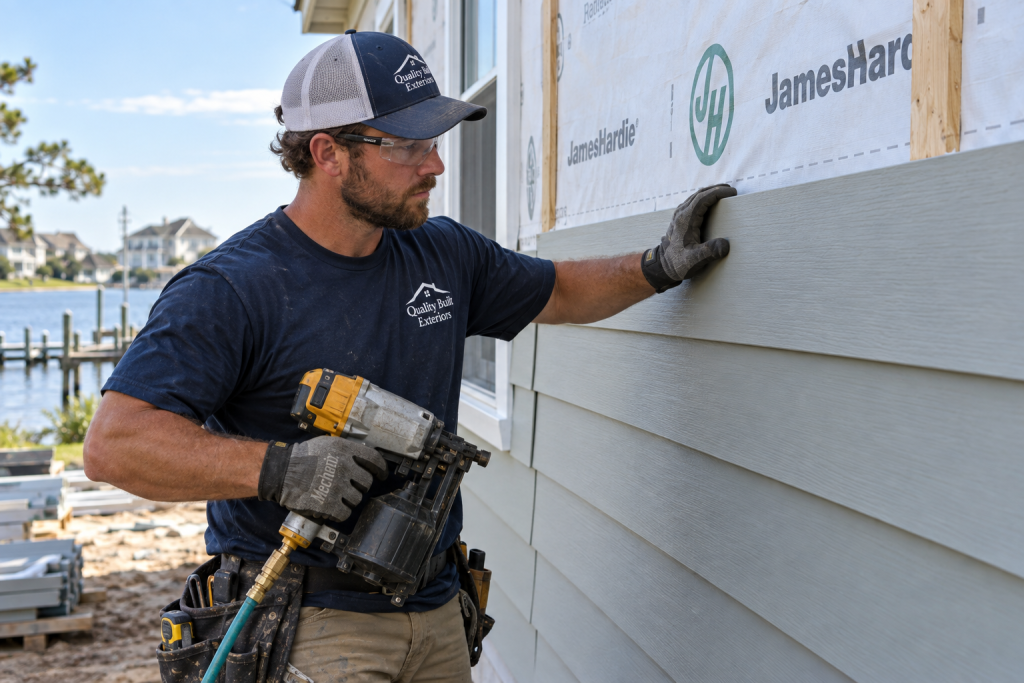
- Precision Fiber Cement Installation: Using pneumatic siding nails and manufacturer-approved fastening patterns, we set each plank to exact tolerances. This is where installation quality either protects or jeopardizes your warranty.
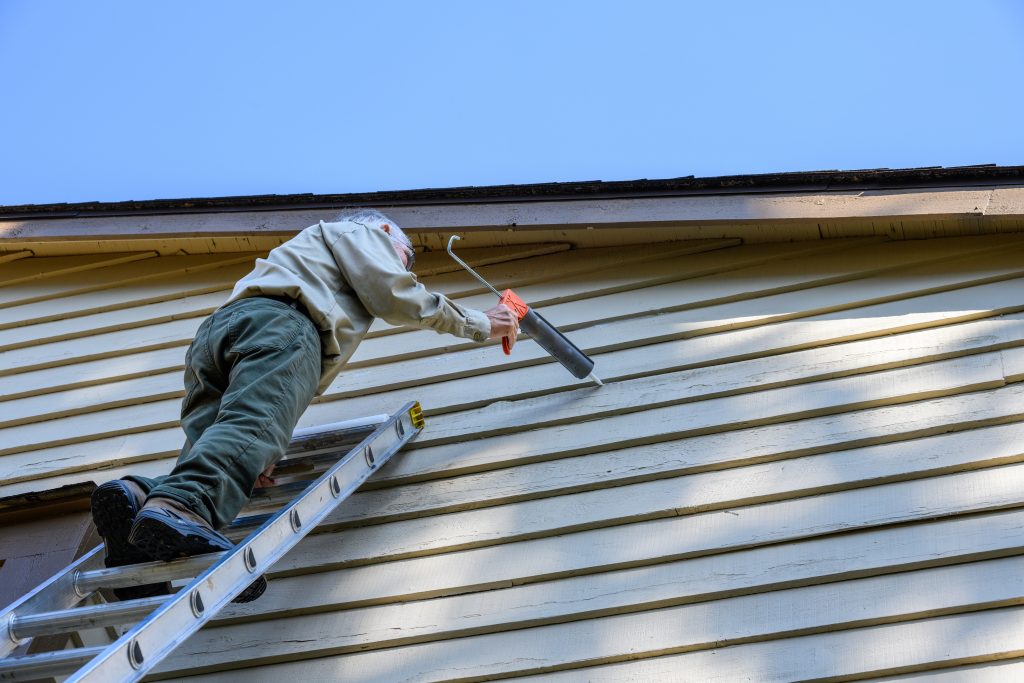
- Joint and Trim Detailing: Trim is fitted and flashed professionally. The bottom horizontal edges where planks overlap are intentionally left uncaulked: sealing those edges traps moisture behind the cladding and accelerates the rot and mold growth the system is designed to prevent.
“Ray was truly a pleasure to work with. I expect it won’t be the last time. VERY impressed with the pride in workmanship!”
A complete exterior upgrade, with the roofline, trim, gutters, and cladding working as a unified system, is what truly shields a coastal home from long-term weather damage. Explore our full range of exterior remodeling services to see how we approach the whole envelope.
Navigating Virginia Building Codes and Permits
The Virginia Uniform Statewide Building Code, promulgated by the Virginia Board of Housing and Community Development, overrides all local building codes and municipal ordinances across the Commonwealth (Virginia Construction Code, dhcd.virginia.gov). That state-level uniformity is designed to maintain high safety and energy standards while keeping construction costs as low as those standards allow, which means homeowners benefit from consistent protections regardless of which Hampton Roads city they’re in.
Wind Zone II designation for Chesapeake, Norfolk, Portsmouth, and Virginia Beach means siding must be anchored to withstand the structural wind loads that coastal storms generate (Virginia Construction Code, dhcd.virginia.gov). Our team handles permit evaluations, historic district approvals, and HOA compliance reviews as part of every project: the homeowner shouldn’t have to navigate that paperwork alone. We manage everything.
Engineered for Coastal Weather Resilience
Salt fog is corrosive in ways that aren’t always visible until the damage is already deep. It ruins cheap materials. Combined with Hampton Roads’ persistent humidity and the ultraviolet intensity of summer sun on south-facing walls, the forces working against a home’s exterior are unyielding. James Hardie products are engineered specifically for climate zones where these stressors compound: the material resists the cracking, splitting, and color fade that degrade vinyl and wood cladding over time, maintaining both its structural integrity and its appearance through decades of coastal exposure.
Aesthetic Versatility and Architectural Styles
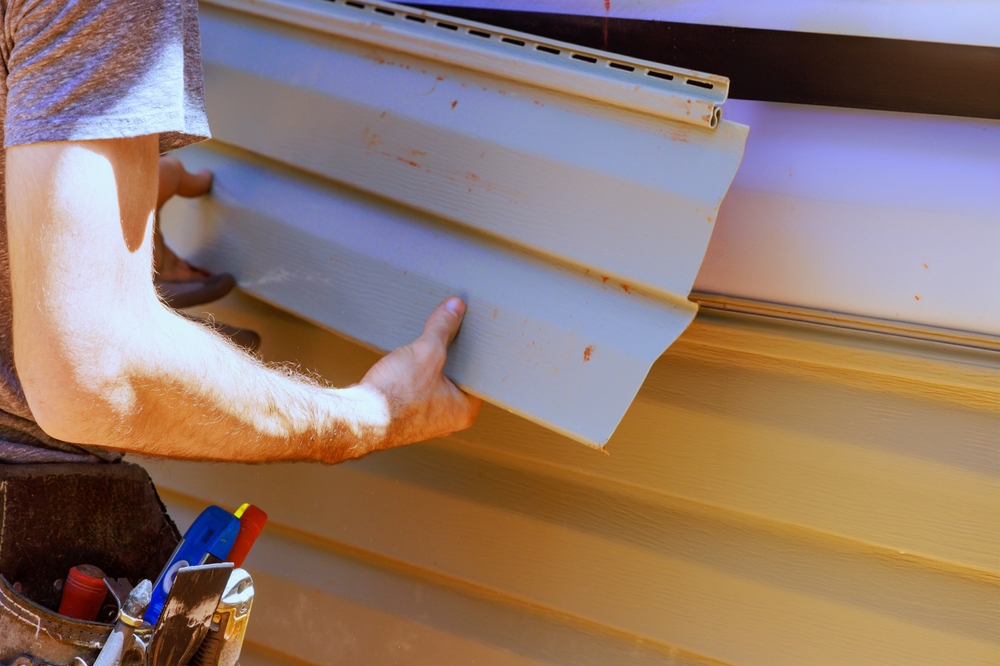
Fiber cement doesn’t restrict a homeowner to a single visual register. You have options. Profiles range from deep wood-grain textures that replicate the warmth of traditional cedar lap siding to clean, smooth surfaces suited to contemporary coastal architecture. What separates Hardie Board from vinyl on the design side is paintability: the surface accepts exterior paint, which means a homeowner can completely recolor the house decades from now without replacing the cladding. Vinyl’s color is fixed at manufacture, so fading or a style change means a full replacement.
Comparing Fiber Cement and Composite Siding
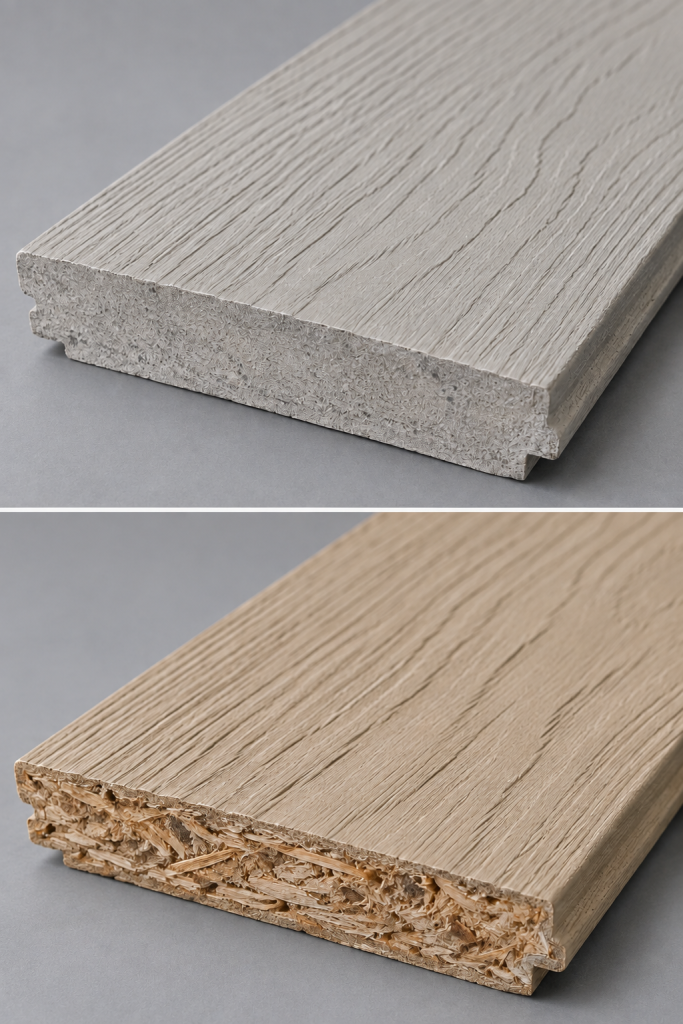
Composite wood siding occupies a middle tier between vinyl and fiber cement, and the differences are worth understanding before committing to either. They are not equal.
- Material composition: Fiber cement uses a mineral-based blend of cement, sand, and cellulose fibers. Composite siding binds wood fibers with resins or polymers, which means its core remains organic and susceptible to moisture intrusion if the protective coating is ever compromised.
- Fire and heat resistance: Fiber cement is non-combustible and will not ignite or melt under high heat exposure. Wood-composite options carry meaningfully greater fire vulnerability.
- Moisture and rot protection: Fiber cement is immune to rot and wood-boring insects regardless of coating condition. Composite products can absorb moisture over time once the surface finish degrades; in a salt-air environment, that degradation tends to arrive sooner than manufacturers’ literature suggests.
Protecting Your Investment with Manufacturer Warranties
James Hardie offers multi-decade warranties on their products, but those warranties are strictly dependent on installation following exact manufacturer specifications. A fastener driven at the wrong angle, flashing omitted at a window transition, or a caulked bottom edge can each constitute a deviation serious enough to void coverage entirely. Hiring a contractor who isn’t trained in manufacturer-approved protocols carries real financial consequences, not just quality ones. Errors cost money.
Our team installs to exact manufacturer standards on every joint, fastener, and weather barrier detail, meeting or exceeding both the Virginia Construction Code and James Hardie’s own installation requirements. That compliance is what keeps the warranty intact and the home protected.
Environmental Benefits of Fiber Cement
Fiber cement is manufactured from natural raw materials, including cellulose fiber, cement, sand, and water, making it a more environmentally responsible choice than PVC-based vinyl siding, which is a petroleum-derived plastic. The more significant environmental argument, though, is longevity. Durability is green. A material that doesn’t need to be torn off and landfilled on a short replacement cycle carries a substantially lower lifetime environmental footprint than one that does, regardless of what either is made from.
Maintenance Guide for James Hardie Board Siding
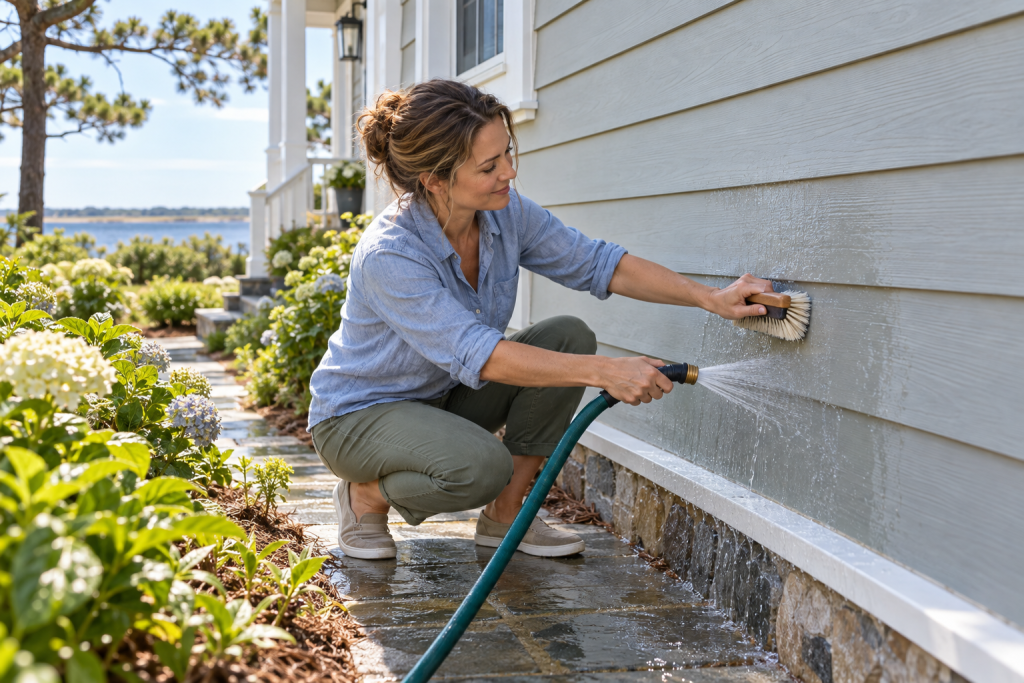
Annual maintenance on Hardie Board is simple: a low-pressure rinse with a garden hose and a soft-to-medium bristle brush removes salt residue, pollen, and dirt without disturbing the factory finish. High-pressure power washing should be avoided: the concentrated stream can erode the surface coating and force water into joints that should stay dry. Never use it.
Caulking at vertical joints and transitions around windows and doors deserves a regular visual check, particularly after a significant storm season. Small gaps that develop over time are easy to address with a matching exterior caulk before they allow water infiltration. The factory-applied ColorPlus finish is engineered for fade resistance, but the siding is fully repaintable when a homeowner eventually wants a different color, a flexibility that most cladding materials simply don’t offer.
Choosing a Local, Family-Owned Contractor
Quality Built Exteriors has been family-owned since 2005, with our main office at 929 Ventures Way, Suite 109 in Chesapeake, and an additional location in Virginia Beach at 5055 Euclid Rd, phone (757) 520-4399. That physical presence matters: we’re not a regional franchise that sends crews from three states away and moves on. We live here. Our A+ BBB rating reflects nearly two decades of honest pricing, transparent communication, and work that holds up when the next storm arrives.
Every project starts with an honest assessment and ends with a walkthrough where the homeowner can see exactly what was done and why. No pressure, no upsells, no disappearing after the deposit clears. We treat the homes we work on the way we’d want someone treating ours, and after nearly twenty years in the same community, that’s the only reputation worth building.
Frequently Asked Questions About Siding Installation
Do you caulk the bottom of Hardie board siding?
No. The bottom horizontal edges where Hardie siding planks overlap must never be caulked. Sealing those edges traps moisture behind the cladding, which creates the conditions for wood rot, mold growth, and structural damage to the sheathing beneath. Those edges remain open to allow ventilation and drainage: that’s by design, not oversight.
Is it better to nail or screw Hardie board siding?
Pneumatic siding nails are the standard for fiber cement installation. Screws can theoretically be used in specialized framing situations, but they’re not recommended for standard installations: the process is significantly more labor-intensive, and over-tightening a screw into fiber cement carries a real risk of cracking the plank at the fastener point.
What materials must be installed underneath Hardie board siding?
Hardie Board requires a solid, flat substrate, such as plywood or OSB rigid sheathing, covered by a high-quality moisture-resistant house wrap or air barrier. Under the Virginia Construction Code, the exterior wall envelope must comply with the International Energy Conservation Code (IECC) to control air infiltration and manage moisture effectively (Virginia Construction Code, dhcd.virginia.gov).
Reach Out to Quality Built Exteriors Today
Your home’s exterior is the first thing coastal weather reaches and the last thing most contractors think carefully about. We plan ahead. If you’re ready to protect it with a material and an installation built to last, call us at (757) 255-7627 or explore the full range of Quality Built Exteriors services to take the next step.