
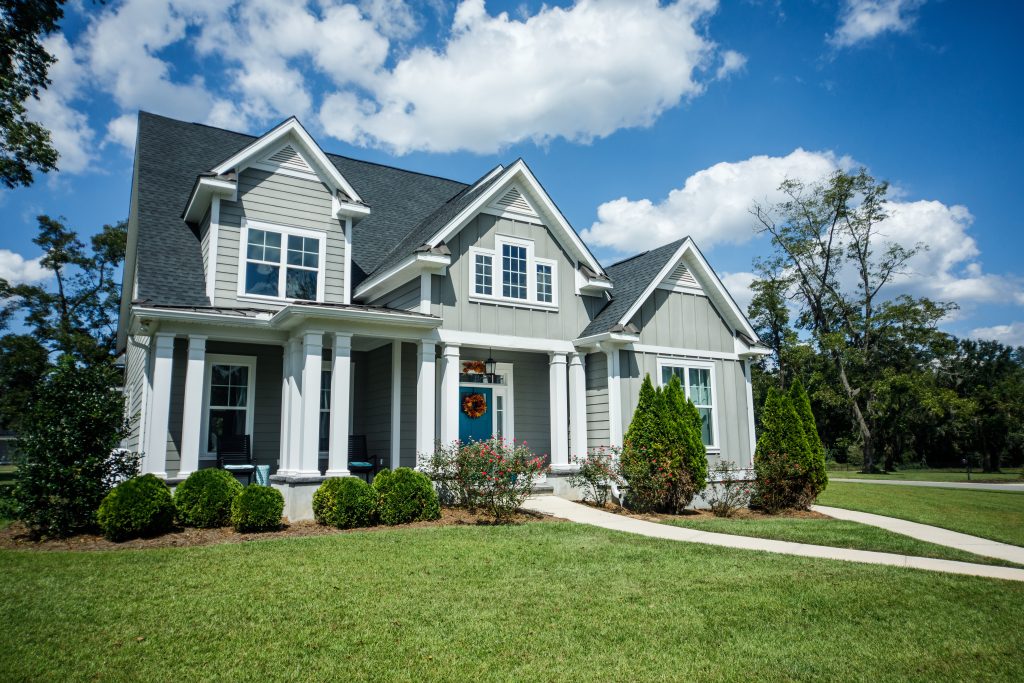
Living along the Chesapeake Bay and the lower Virginia coast means you already understand the calculus of storm season. The water that makes Hampton Roads one of the most livable regions on the East Coast is the same water that amplifies every tropical system that drifts northward. Storm surge can push up the Elizabeth River and through the low-lying streets of Norfolk before a storm even makes landfall. Tidal flooding in areas like Willoughby Spit and Poquoson can begin hours ahead of peak winds. That geography is not going anywhere, and neither is the annual exposure that comes with it. Storms do not wait.
The 2026 Atlantic hurricane season runs from June 1 through November 30, 2026, with the period of greatest risk concentrated from late summer into early autumn, according to the Virginia Governor’s 2026 hurricane preparedness announcement. Coastal Virginia faces a distinct combination of storm surge, tidal flooding, and sustained damaging winds from systems that track up the Atlantic seaboard. Governor Abigail Spanberger and Acting State Coordinator of Emergency Management Lauren Opett have both emphasized that preparation before a storm appears on the forecast map is the only kind of preparation that works. By the time a named storm is three days out, local contractors are fully booked, building supply shelves are stripped, and your options narrow rapidly. Taking action now ensures you have the time and resources to secure your home.
Securing Your Roof and Gutters Before Coastal Storms Strike
Inspecting Shingles and Flashing
A roof that looks fine from the street can still have weakened shingles: slightly lifted tabs, cracked sealant strips, or flashing that has separated from a chimney or dormer by a fraction of an inch. Those small gaps are exactly what high-wind, rain-driven events exploit. During a coastal storm, wind pressure doesn’t just push against a roof; it creates uplift forces that work on any edge or seam that isn’t fully adhered. Once wind-driven rain finds its way under lifted flashing around a valley or a skylight curb, the water intrusion that follows can saturate insulation, rot sheathing, and damage interior ceilings, all from a defect that would have cost very little to seal beforehand.
Architectural shingles, when properly installed, layer tightly across the roof deck and shed water the way a well-fitted coat sheds rain, with each course overlapping the one below it and no exposed edges for wind to catch. When one shingle starts to lift, or a tab loses its adhesive bond, that layering system begins to unravel. A professional inspection before the season peaks will catch these weak spots while repair is still a simple task rather than an emergency call.
Clearing and Reinforcing Gutter Systems
Hampton Roads receives intense rainfall during tropical events, which are not the slow, steady rain of a nor’easter but sudden, high-volume downpours that can overwhelm a gutter system that is even partially clogged. When gutters back up, water pools at the roofline and can migrate under the first course of shingles or behind the fascia board. Fascia rot is one of the more insidious forms of storm-related damage because it often goes unnoticed until the gutter itself begins to pull away from the structure. By then, the damage is done.
Beyond clearing debris, check that gutter hangers are firmly seated and spaced correctly. A gutter filled with standing water during a heavy storm carries significant weight, and hangers that have loosened over the years, especially on older homes in Chesapeake or Newport News where original installations may be decades old, can fail under that load. Downspout extensions should direct water well away from the foundation to prevent saturated soil and potential basement seepage.
A proactive inspection is the most reliable way to prep your home for hurricanes before severe weather arrives. Addressing small issues in May or early June costs a fraction of what emergency repairs run in September, and it means your home enters the peak risk window in the best possible condition.
Quality Built Exteriors has been a family-owned company since 2005, carrying an A+ BBB rating and serving homeowners across Chesapeake, Newport News, and Virginia Beach. Having a local professional evaluate your roof’s integrity before the season peaks isn’t just about peace of mind; it’s about ensuring that minor vulnerabilities don’t become the entry point for a major storm disaster.
Fortifying Exterior Siding and Windows Against High Winds
Checking Siding Panels and Joints
The building envelope, which includes everything between your interior walls and the outside air, is only as strong as its weakest joint. During a coastal storm, wind-driven water doesn’t need a large gap to cause serious damage; it needs sustained pressure and a failed sealant line. Vinyl siding panels that have shifted even slightly out of their locking channels, or fiber cement panels where fasteners have corroded, can allow water to migrate behind the cladding and into the wall cavity.
Salt air is a particular concern in coastal Hampton Roads neighborhoods. The combination of high humidity and airborne salt speeds up corrosion on siding fasteners, especially on homes within a few miles of the bay or the ocean. Fasteners that look intact from the outside may have lost significant holding strength. Before tropical storm-force winds arrive, which bring sustained speeds above 39 mph, loose panels need to be re-secured, and any failed joint sealant should be replaced.
Protecting Windows and Entry Doors
Windows are the most exposed points in a home’s exterior during a high-wind event, primarily because of flying debris. A single piece of airborne material, like a fence board, a patio chair, or a tree branch, can breach a standard window and instantly pressurize the interior of the home, which dramatically increases the structural load on the roof. Temporary plywood boarding provides some protection, but it requires advance notice, physical labor, and storage space for materials that most homeowners don’t have on hand. It is a major hassle.
Permanent upgrades offer a more practical long-term solution. Impact-rated glass and wind-load rated entry doors provide passive, year-round protection without any pre-storm installation effort. High-quality perimeter seals on windows also prevent water intrusion under the intense pressure differential that a major storm creates, which is a detail that matters as much as the glass itself.
Upgrading to hurricane-resistant construction materials like impact-rated windows or reinforced siding provides long-term protection that extends well beyond any single storm season. To put the forces involved in perspective, the Saffir-Simpson Hurricane Wind Scale categorizes sustained wind speeds as follows: Category 1 at 74 to 95 mph, Category 2 at 96 to 110 mph, Category 3 at 111 to 129 mph, Category 4 at 130 to 156 mph, and Category 5 at 157 mph or higher. Siding and window systems in coastal Virginia need to be engineered and installed to withstand those loads, not just rated for them on paper.
Before the season peaks, work through this exterior inspection checklist:
- Check all caulking and sealant around window frames for cracks, gaps, or signs of dry rot.
- Inspect siding panels along the bottom edge of the home where wind lift often begins.
- Ensure all window locks are fully functional and pull the sash tightly against the weatherstripping.
- Clear any debris from window sill weep holes to allow proper drainage during heavy downpours.
As a family-owned company since 2005 with an A+ BBB rating, Quality Built Exteriors helps protect your home. Residents in Virginia Beach and the surrounding communities can schedule a roof inspection or a full exterior assessment before the storm season peaks. Reach the Virginia Beach office at 5055 Euclid Rd, (757) 520-4399, or call the main office at (757) 255-7627.
Managing Landscaping and Active Construction Zones
Trimming Trees and Securing Loose Yard Items
Overhanging branches are one of the most expected sources of storm damage in Hampton Roads neighborhoods, and they’re also one of the most preventable. A mature oak limb extending over a roofline doesn’t need a direct hit from a Category 3 storm to cause structural damage: sustained tropical storm force winds are enough to snap a compromised branch and drive it through shingles or a dormer. Trees within striking distance of the house should be evaluated by a certified arborist before the season, with dead wood and structurally weak limbs removed.
Loose yard items deserve the same attention. Patio furniture, trash cans, garden ornaments, and potted plants become projectiles in sustained high winds. Securing or storing these items before a storm is basic preparation, but it’s worth doing before a storm watch is issued rather than scrambling during a warning.
Stormwater and Erosion Control for Active Renovations
For homeowners currently undergoing exterior renovations or landscaping work that disturbs soil, there is an additional layer of preparation that goes beyond the home itself. Virginia environmental guidelines require that perimeter erosion and sediment control (ESC) best management practices be installed at the outset of any land-disturbing activities, according to the Virginia DEQ stormwater construction guidelines. Proper construction planning and ESC measures prevent heavy stormwater runoff from washing away exposed soil and damaging downstream water resources, which is a concern that becomes acute when a tropical system drops several inches of rain in a matter of hours.
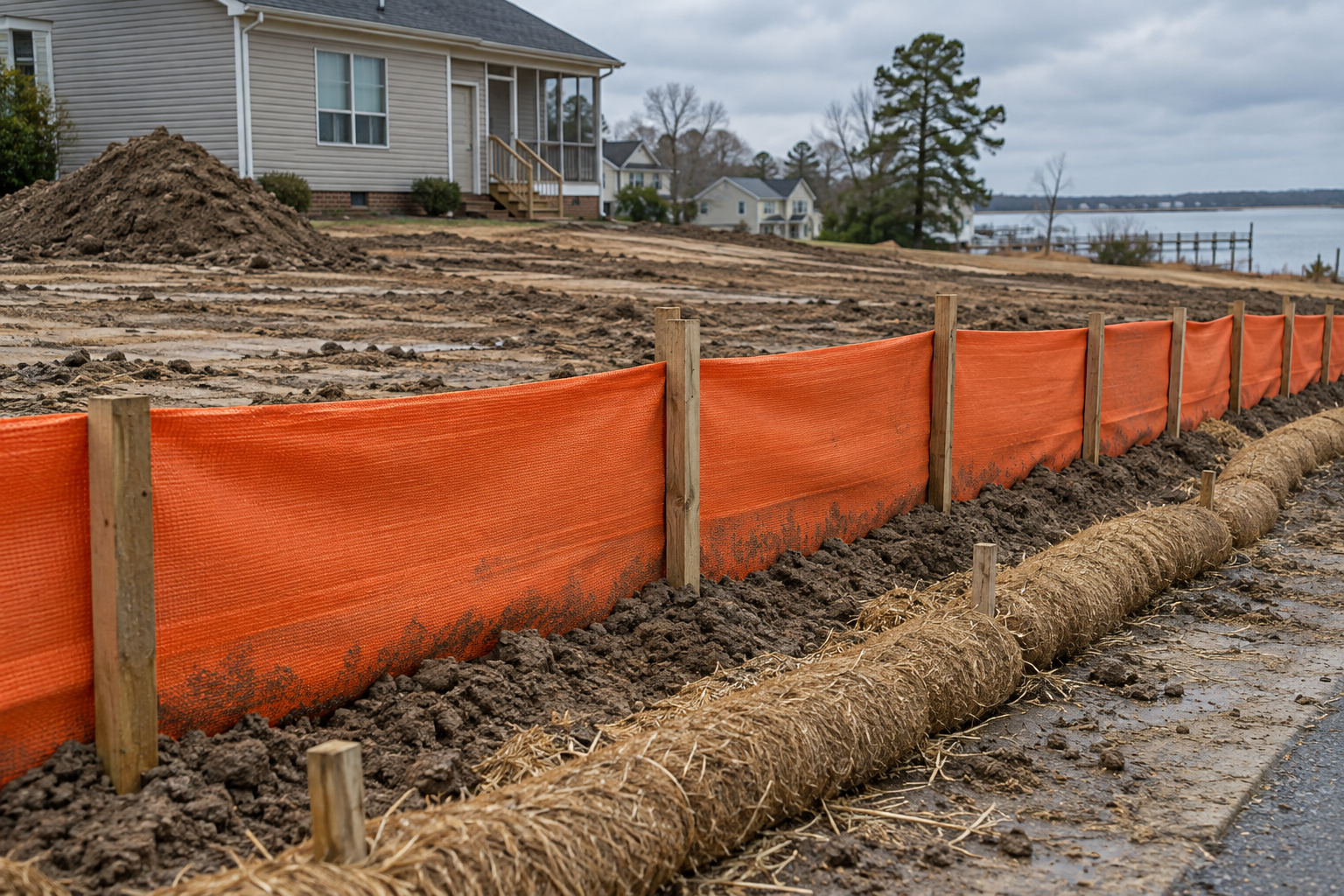
Heavy rains during the 2026 Atlantic hurricane season, running from June 1 through November 30, can strip exposed soil from an active renovation site in a single storm event, undoing weeks of grading work and sending sediment into neighboring drainage systems. Virginia DEQ stormwater construction standards make clear that these controls are not optional; they are required from the start of land-disturbing activity. Quality Built Exteriors follows all applicable local and state environmental guidelines on every exterior project, so homeowners don’t have to navigate those compliance requirements on their own.
Our team is fully EPA-certified in lead renovation, paint, repair, and lead abatement. Safety comes first. That certification reflects a broader commitment to safety, quality craftsmanship, and regulatory compliance that extends to how we manage every job site, including stormwater controls during active construction.
Assembling Emergency Supplies and Knowing Your Evacuation Zone
Preparing Your Household Emergency Kit
Virginia’s state emergency guidelines recommend building or refreshing an emergency kit with enough food, water, medications, batteries, and flashlights to sustain your household for at least three days. That three-day limit accounts for the window between a storm’s landfall and the restoration of basic services, including power, potable water, and passable roads, which in a significant event can take considerably longer. Critical documents, including homeowners insurance records, identification, and medical information, should be stored in a waterproof container or backed up to a secure digital location before the season begins.
Generators and backup power sources should be tested well ahead of the peak risk period. A generator that hasn’t run since last October may have a carburetor issue or a fuel problem that won’t reveal itself until you need it. Running it under load for a few hours in June is a far better way to find out than during a post-storm power outage. Do not wait.
Knowing Your Coastal Evacuation Route
Coastal Virginia residents need to identify their specific evacuation zone and planned routes before a storm is on the map, not after. The state’s dedicated portal, KnowYourZoneVA.org, allows homeowners to look up their zone by address. Different zones have different trigger points for mandatory evacuation orders, and the roads that serve Hampton Roads, particularly those crossing the Hampton Roads Bridge-Tunnel and the Downtown Tunnel, can become severely crowded once evacuation orders are issued. Knowing your route and your timing in advance is the difference between a manageable departure and being stuck in traffic as conditions deteriorate.
Family communication plans and pet emergency preparations, including food, medications, and transportation arrangements for animals, should be reviewed and updated at the same time. These aren’t details to improvise under pressure.
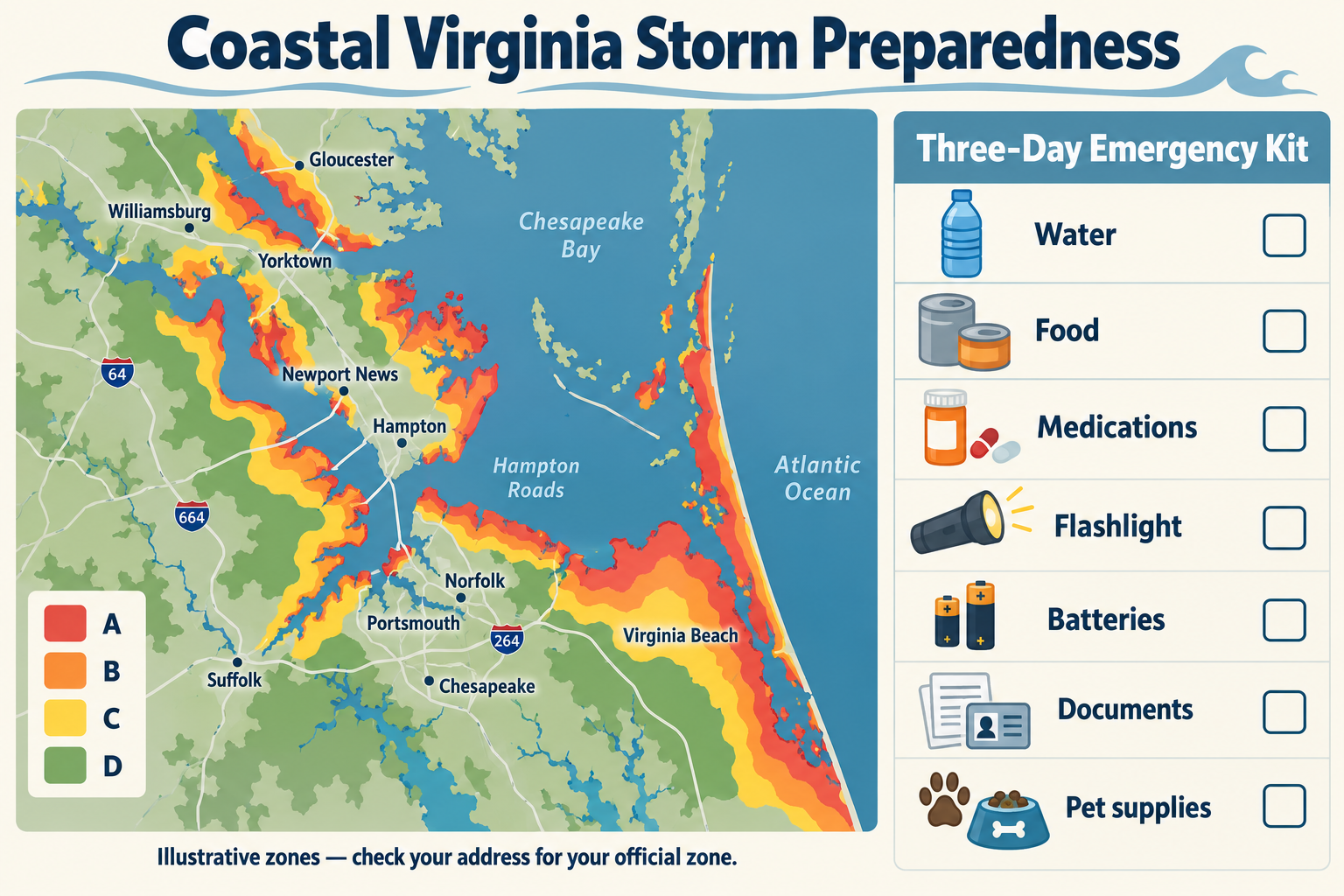
Testing backup power sources before they are needed is one of the most practical steps a homeowner can take. A generator that fails during a prolonged outage isn’t just an inconvenience; in summer heat, it can become a safety issue for elderly family members or anyone dependent on medical equipment. Proactive preparation is the most effective way to protect your family and secure your property when a storm does arrive.
State emergency leaders, including Governor Spanberger and Acting State Coordinator Lauren Opett, have been consistent on one point: preparing before a storm is on the forecast map is vital. The Atlantic basin produces systems that can intensify rapidly and track northward with limited warning, as Hurricane Helene demonstrated. Hampton Roads sits directly in the path of that northward track, and the region’s low elevation and tidal connectivity mean that even a weakened system can produce significant flooding.
“We called Quality Built Exteriors; they came out the next day and had us on the books and scheduled quickly.”
Frequently Asked Questions About Coastal Storm Preparation
How does salt air affect my home’s exterior siding after a hurricane?
Coastal winds carry corrosive salt spray far inland during a storm. After the hurricane passes and it is safe to go outside, a thorough freshwater rinse of your siding, windows, and metal hardware will help prevent long-term corrosion and paint wear. Skipping this step after a significant storm can accelerate the deterioration of fasteners and sealants that were already under stress during the event.
What is the average cost of storm-related roof repairs for unmaintained homes in Hampton Roads?
The exact cost varies depending on the extent of the damage and the materials involved. What is consistent across the industry is that regular maintenance is always the more cost-effective approach: catching a lifted shingle in spring costs a fraction of replacing water-damaged sheathing and interior ceilings after a storm.
Is there a waiting period for new flood insurance policies in Virginia?
Yes. Most flood insurance policies, including those through the National Flood Insurance Program (NFIP), carry a standard 30-day waiting period before coverage becomes active. Securing a policy after a storm is named, or even after the season begins, may leave you unprotected for the events most likely to cause damage. Coverage decisions need to happen well before the peak risk window opens.
How can I tell if my vinyl siding is rated for coastal wind speeds?
The manufacturer’s wind-load rating is typically printed on the product packaging or installation documentation. Quality vinyl siding used in coastal Virginia is engineered to withstand high wind speeds, but the rating on the packaging only matters if the product was installed correctly and the fasteners have maintained their holding strength over time. A professional contractor can verify whether your existing siding is properly secured to meet local wind-load requirements, which is something a visual inspection from the ground won’t tell you.
What should I do if my home’s exterior is damaged during a storm?
First, ensure your family is safe. Once conditions allow, document all damage with photos before any cleanup or temporary repairs begin, as your insurance adjuster will need that documentation. Contact your insurance company immediately, then reach out to a trusted local contractor. Quality Built Exteriors carries an A+ BBB rating and can be reached at (757) 255-7627 for prompt, professional emergency repairs.
Contact Quality Built Exteriors Today to Always Be Prepared
The 2026 hurricane season presents the same annual challenge Hampton Roads homeowners have always faced, but preparation quality varies greatly from one property to the next. Homes that enter the season with inspected roofs, secured siding, cleared gutters, and reinforced windows consistently fare better, not because they’re lucky, but because the work was done before the storm had a name. Quality Built Exteriors has been serving Chesapeake, Newport News, and Virginia Beach since 2005 as a family-owned company with an A+ BBB rating, and that local history means we understand what these storms do to homes in this region. Our team is here before the season, during the preparation window, and after the storm if repairs are needed.
Contact Quality Built Exteriors today at (757) 255-7627 or visit our office at 929 Ventures Way, Suite 109, to request a free estimate on pre-season exterior maintenance and fortification. The best time to prepare is always before you need to.